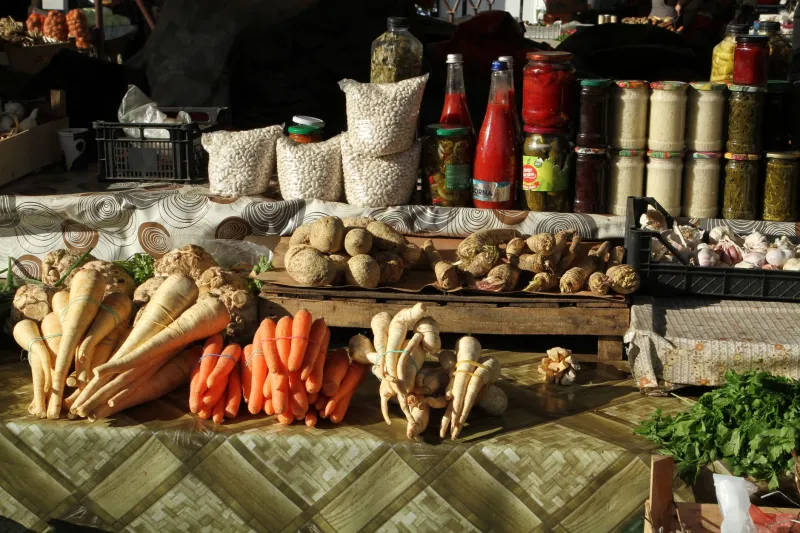
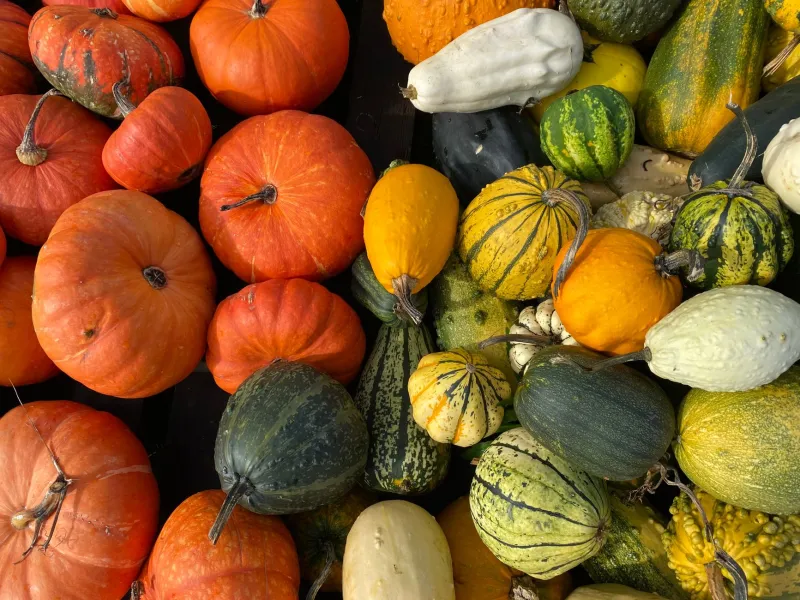
Why That Carrot at the Farmers Market Made You Believe in Vegetables Again
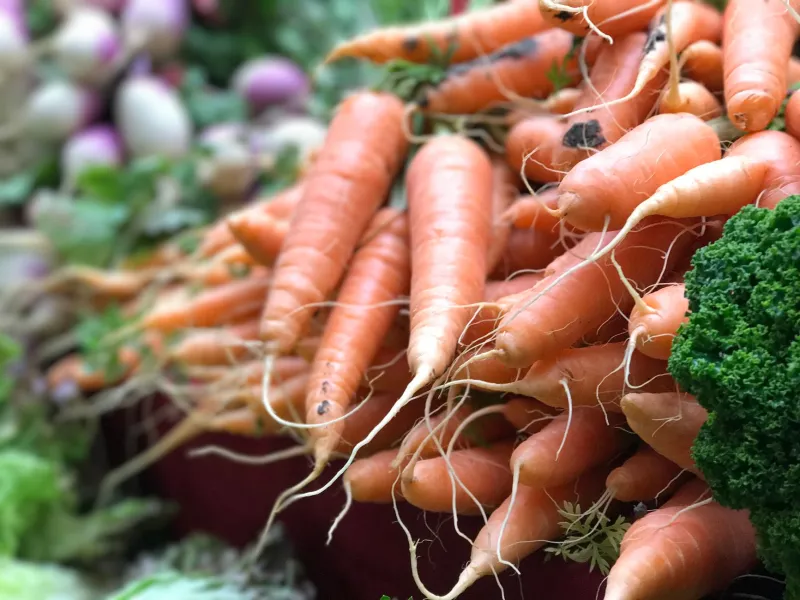
You know the moment. You're wandering a Saturday farmers market, maybe holding a coffee that's already going cold, and a vendor hands you a sample of something ordinary — a carrot, a cherry tomato, a radish. And you stop walking. Because it actually tastes like something. Not like the faint, watery echo of a vegetable, but like the real, living thing.
Then you go home, cook dinner with whatever's left in your crisper drawer, and wonder why nothing ever tastes that good when you make it yourself.
Here's the thing: it's not your cooking. It's the carrot.
Flavor Starts in the Ground, Long Before Your Kitchen
Vegetable flavor isn't just a function of freshness — though freshness matters enormously, and we'll get there. It begins in the soil, which is basically the vegetable's entire universe while it's alive. Soil that's rich in organic matter, teeming with microbial life, and well-balanced in minerals produces vegetables with more complex flavor compounds. Depleted, heavily tilled, or chemically managed soil tends to grow vegetables that look fine but taste like not much.
Think of it like this: a plant under stress from nutrient-poor soil often produces more sugars and secondary compounds — sometimes in ways that actually concentrate flavor, but more often in ways that make the vegetable work harder just to survive, leaving less energy for the stuff that makes it taste extraordinary. Meanwhile, a vegetable grown in genuinely healthy soil, with access to the right balance of nitrogen, phosphorus, potassium, and a whole cast of trace minerals, builds flavor from the ground up. Literally.
This is why that carrot at the farmers market — grown by someone who's been nurturing the same plot of land for a decade — tastes fundamentally different from one that was grown in monoculture soil, shipped across three states, and stored in a warehouse for a week before it hit the grocery shelf.
Variety Is Doing More Work Than You Think
Most supermarket vegetables are selected for one thing above almost everything else: durability. They need to survive the supply chain — harvesting equipment, packing facilities, refrigerated trucks, distribution centers, fluorescent-lit produce sections. Flavor is, at best, a secondary consideration.
Farmers market growers, on the other hand, often grow heirloom or specialty varieties that would never survive commercial distribution. They're too delicate, too irregular, too perishable. But they're also, frequently, dramatically more flavorful. A Chantenay carrot or a Dragon Purple carrot tastes nothing like a standard Imperator — the kind that fills most grocery store bags. The difference in sugar content, earthiness, and texture is real and measurable.
When you're shopping at a market, don't be afraid to ask your farmer what variety they're growing. Most of them love that question. It's the kind of conversation that leads to you going home with something you've never cooked before, which is basically the whole point.
Harvest Timing Changes Everything
Vegetables have a peak moment. A narrow window when their sugar content is highest, their cell walls are firm but not fibrous, and their flavor compounds are at maximum concentration. Miss that window — even by a few days — and you've got something technically edible but culinarily disappointing.
Commercial growers often harvest early, before that peak, so the produce can ripen in transit or in storage. It's a practical necessity, but it means you're frequently eating vegetables that never actually hit their stride. A tomato that ripened on the vine in actual sunlight tastes categorically different from one that was picked green and gassed with ethylene to trigger color change.
Small-scale farmers at your local market typically harvest much closer to peak — often the morning of the market itself. That window is part of what you're paying for when you spend a little more at a farm stand than at a big-box grocery.
The Storage Factor Nobody Talks About
Once a vegetable is harvested, the clock starts. And it doesn't stop.
Many vegetables — especially leafy greens, corn, peas, and herbs — begin converting their sugars to starches almost immediately after being cut. This is why corn picked from a backyard garden and eaten within the hour is genuinely a different food than corn that's been sitting in a produce section for three days. The sweetness doesn't just fade — it chemically transforms into something starchier and blander.
Root vegetables like carrots and beets are more stable, but they still lose moisture and volatile aromatic compounds over time. That earthy, almost perfumed quality in a freshly pulled carrot? That's partly from volatile terpenes that dissipate during extended storage. The longer a vegetable sits, the more of that aromatic complexity it loses.
This is worth keeping in mind when you get home from the market. Use the most perishable things first. Build your week's cooking around what needs to be eaten now, not around what's most convenient.
How to Actually Taste the Difference
One of the best things you can do as a home cook is start tasting vegetables raw, before you do anything to them. Not because raw is better — it often isn't — but because it tells you what you're working with.
A carrot that's genuinely sweet and earthy raw will be extraordinary roasted. A carrot that tastes flat and watery raw is going to need a lot of help — more fat, more caramelization, maybe a hit of acid at the end to brighten it up. You're not just cooking the vegetable; you're cooking in response to what the vegetable actually is.
Train yourself to notice a few things when you taste something raw: Is there sweetness? Where does it hit on your palate — front or back? Is there bitterness, and does it linger or fade quickly? Is there any kind of aroma when you bite into it, that volatile burst that hits the back of your nose? These are the flavor signals that tell you how to cook something well.
Shopping Smarter, Starting This Weekend
None of this means you need to abandon grocery stores entirely or spend a small fortune at farmers markets every week. But it does mean being more intentional about which vegetables you buy where.
For things where flavor really matters — tomatoes in summer, corn in August, fresh herbs, delicate greens — the farmers market is worth the trip and the extra dollar or two. For pantry staples and things you're going to cook heavily into a soup or stew, the grocery store is fine.
And when you do shop at the market, talk to the people selling the food. Ask what's at peak right now. Ask what variety it is. Ask how long ago it was harvested. That conversation is the difference between buying a vegetable and actually understanding what you're about to cook.
The carrot that stopped you in your tracks at the market? It wasn't magic. It was soil, timing, variety, and care. Once you understand that, you start seeing every vegetable differently — not as a given, but as the result of a hundred small decisions made before it ever reached your hands.