Earning Your Dinner: Why the Most Annoying Vegetables Make the Best Cooks
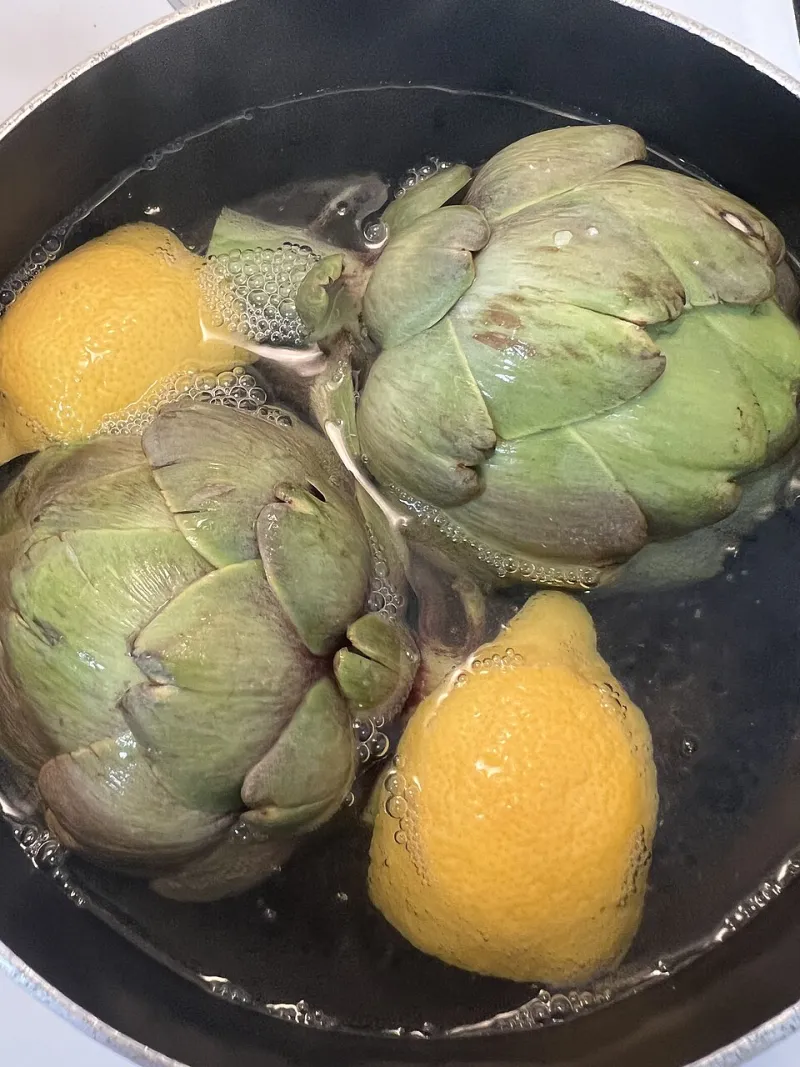
Photo: HaJunkiyada, CC BY-SA 4.0, via Wikimedia Commons
There's a moment about forty minutes into your first from-scratch artichoke where you question every life choice that led you here. You've snapped off leathery outer leaves. You've shaved the fibrous stem like you're whittling a canoe. You've got lemon water, a sharp paring knife, and what appears to be a small armored plant that resents you personally.
And then you steam it, pull off that first leaf dipped in butter, scrape it across your teeth, and get maybe a teaspoon of the good stuff. It's absurd. It's also kind of the point.
The Case Against Convenience
We've spent two decades optimizing vegetables for speed. Baby carrots. Pre-cut squash. Bagged greens washed three times. There's nothing wrong with any of it — weeknights are real, and nobody gets a medal for hand-trimming frisée on a Tuesday.
But something gets lost when every vegetable arrives pre-behaved. The fussy ones — the artichokes, the fava beans, the celeriac lurking under its dirt-caked hide — teach you things the convenient ones can't. How a knife actually moves through plant fiber. What a vegetable smells like at the moment it's done. Patience, in the most literal, edible form.
Think of it like the difference between streaming a song and seeing it live. Same notes. Completely different experience.
The High-Effort Hall of Fame
Artichokes. The namesake, the standard-bearer. Trim, steam, and eat leaf by leaf until you hit the heart — that dense, nutty reward at the center. Yes, it's a lot of ceremony for a small amount of vegetable. That ceremony is the meal.
Fava beans. Double shelling: once out of the pod, then again out of their waxy little jackets after a quick blanch. Two pounds of pods becomes a modest bowl of beans. But that bright, faintly bitter, utterly springlike flavor? Nothing in the freezer aisle comes close.
Celeriac. Looks like a prop from a swamp movie, tastes like celery's sophisticated cousin — nutty, faintly sweet, incredible roasted or mashed. The peel is thick and gnarled, so use a heavy knife and don't be shy about how much you remove.
Fresh chestnuts. Score, roast, peel while hot, and accept that you'll sacrifice a few to the gods of stubborn shells. The ones that come out whole taste like autumn distilled.
Jerusalem artichokes (sunchokes). Knobby, unpredictable, and worth every tedious scrub-and-peel — especially if you roast them hard so the sugars concentrate.
A Decoding Guide for the Fuss-Averse
Not all high-effort vegetables are difficult in the same way, which matters when you're deciding what to tackle on a Sunday afternoon:
- Knife-work fussy (artichokes, celeriac): The work happens up front. Once it's prepped, cooking is easy. Do it while listening to something good.
- Shelling fussy (fava beans, English peas): Great solo or with a friend and a glass of wine. Kids genuinely like doing this, weirdly.
- Peeling fussy (chestnuts, sunchokes): Timing-sensitive. Peel chestnuts while they're still hot or suffer the consequences.
The trick is to match the fuss to the mood. Don't attempt artichokes at 6 p.m. on a Wednesday. Save them for when cooking is the activity, not the errand.
What You Actually Get Back
Here's the part nobody tells you: after a season of cooking fussy vegetables, everything else gets easier. Your knife confidence improves. Your sense of doneness sharpens. You stop being intimidated by any recipe with the words "trim" or "peel" in it.
The artichoke doesn't just feed you. It trains you. And unlike most teachers, it's delicious with lemon butter.