The Secret Produce Aisle: How Restaurant Chefs Shop for Vegetables (And How You Can Too)
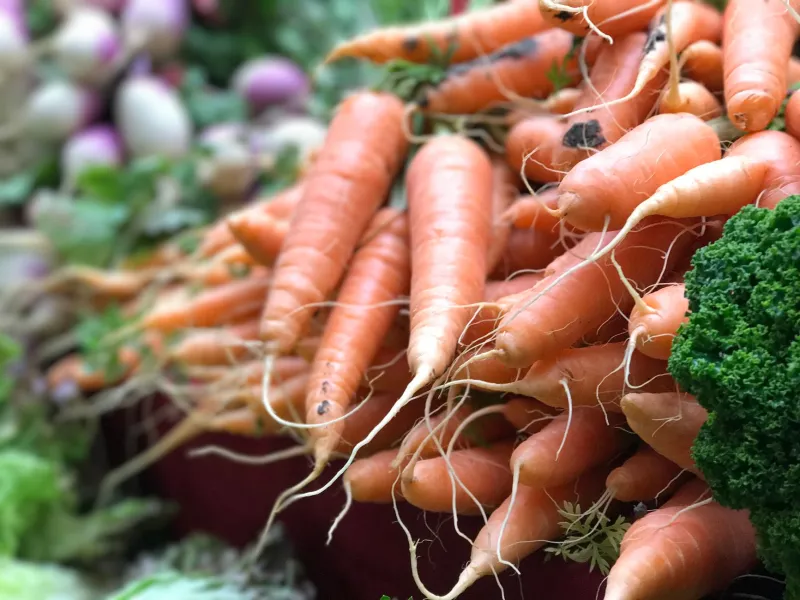
You've done everything right. You roasted those carrots at high heat, hit them with good olive oil, finished with fresh herbs. And yet — they're fine. Maybe even good. But they're not that. Not the kind of carrot that made you close your eyes at a restaurant last spring and quietly reconsider your entire relationship with root vegetables.
Here's the thing: that gap probably wasn't technique. It was the carrot itself.
Professional chefs and home cooks are working from completely different ingredient pools, and most of us have no idea how wide that divide actually runs. Understanding why — and more importantly, how to cross it — might be the single biggest upgrade your vegetable cooking can make.
The Two-Track Produce System Nobody Talks About
The American food supply chain has a quiet split running through its middle. On one side: the retail market. Supermarkets, big-box stores, even many co-ops and natural grocers pull from a distribution system optimized for shelf life, uniformity, and scale. Produce is harvested early, stored in controlled-atmosphere warehouses, and shipped across the country before it ever sees a display case.
On the other side: the food service supply chain. Restaurant chefs — especially those running serious vegetable-forward kitchens — often bypass that system entirely. They're working directly with small farms, regional distributors, and specialty wholesalers who operate on completely different timelines and priorities.
The result? A chef might be serving a Japanese turnip variety that was harvested two days ago, forty miles away, while the grocery store turnips in your crisper drawer have been in cold storage for three weeks and traveled from a farm in a different time zone.
Freshness isn't just a feel-good concept here. It's chemistry. Sugars convert to starches. Cell walls weaken. Volatile aromatic compounds — the ones responsible for that grassy, bright, alive quality in a truly fresh vegetable — dissipate faster than most people realize.
What Chefs Are Actually Buying
Walk into the walk-in cooler of a vegetable-serious restaurant and you'll find things you won't see at most grocery stores. Not because they're exotic for the sake of it, but because small farms and specialty distributors are growing and carrying varieties selected for flavor rather than durability.
Think: Chioggia beets with their candy-striped interior. Watermelon radishes so vivid they look like a cross section of a planet. Hakurei turnips so sweet and tender they're eaten raw like an apple. Lunchbox peppers in shades of yellow and red that snap with a sweetness commercial bell peppers rarely match. Dragon tongue beans. Purple Viking potatoes. Spigarello, the leafy broccoli cousin that Italian grandmothers have been cooking forever and American grocery chains have largely ignored.
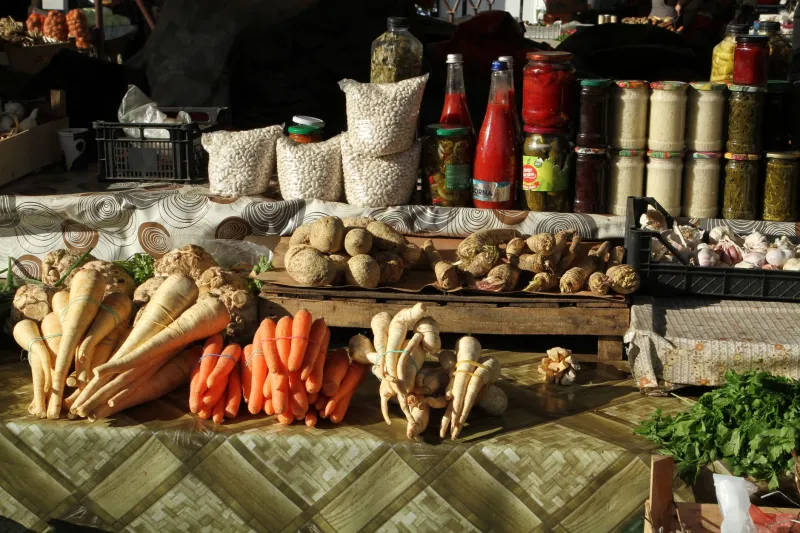
Chefs also buy ugly — intentionally. Knobby celery root, scarred heirloom tomatoes, misshapen fennel bulbs that would never survive a retail buyer's inspection. These aren't seconds. They're often the most flavorful specimens on the farm, grown without the cosmetic compromises that commercial agriculture demands.
The Wholesale Market Secret
Here's something most home cooks don't know: in many major American cities, the wholesale produce terminal is technically open to the public, or at least accessible with a little effort.
Terminals like the Hunt's Point Market in the Bronx, the San Francisco Wholesale Produce Market, or the Chicago International Produce Market are where restaurant buyers, caterers, and distributors source enormous quantities of product — but many vendors there will happily sell to individuals, especially if you show up early, know what you want, and don't balk at buying in slightly larger quantities than you would at a grocery store.
You're not going to walk out with a single bunch of radishes. But if you're willing to take home a flat of strawberries or a case of heirloom tomatoes at the peak of summer, you'll pay less than retail and get quality that the grocery store system simply can't match.
Direct-From-Farm Relationships: The Real Cheat Code
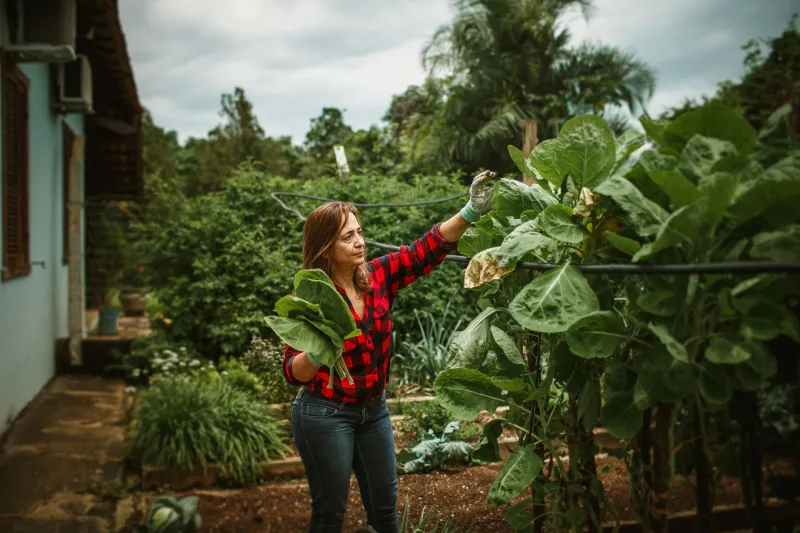
The move that's most transformative, though, is the one that feels most old-fashioned: knowing your farmer.
CSA subscriptions (community-supported agriculture) are the most accessible version of this. You pay upfront at the start of the season, and a local farm delivers or holds a weekly box of whatever's coming out of the ground. The quality is typically excellent. The varieties are often unusual. And because you're essentially pre-financing the farm's season, you tend to get the good stuff.
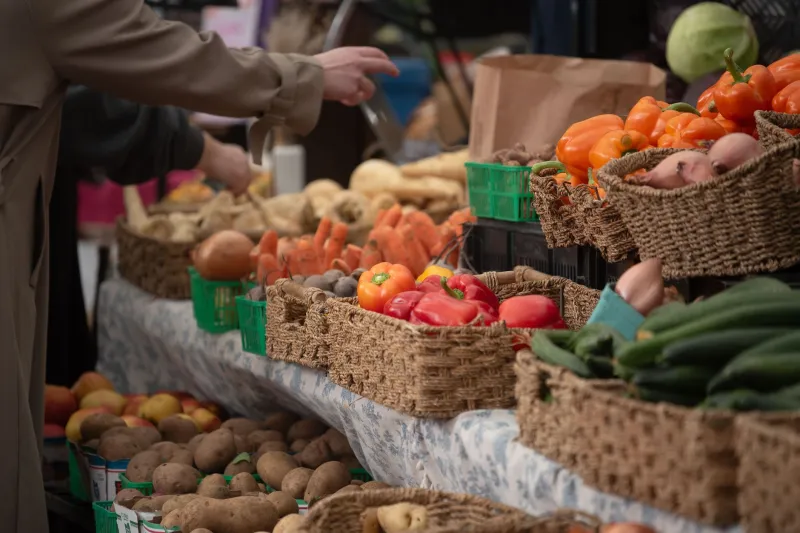
But go further if you can. Show up at your farmers market before the crowds arrive — some vendors will let you pre-order specific items or reserve unusual varieties before they hit the table. Strike up a real conversation. Tell them you're a serious home cook who wants to try things that don't make it to the grocery store. You'd be surprised how often that conversation leads to a flat of something extraordinary appearing in your weekly pickup.
Some farms now offer "chef boxes" or "restaurant shares" — larger, more varied, often weirder selections designed for professional kitchens. Ask if they'll sell you one.
Rethinking What You're Looking For
Part of the problem is that most home cooks have been trained by grocery stores to shop with our eyes. We're looking for the shiniest pepper, the most symmetrical squash, the bunch of kale with the fewest blemishes. But that's retail conditioning talking, not flavor instinct.
Chefs shop differently. They're smelling things. Feeling for firmness and weight. Asking when something arrived and where it came from. They're looking for the variety name, not just the species. "Tomato" is not enough information. "Sun Gold" or "Cherokee Purple" or "Green Zebra" tells you something real.
Start doing this. Ask the produce worker at your grocery store or co-op where their vegetables come from and how long they've been in. A good store will know. If they don't, that's useful information too.
The Farmer's Market Isn't Enough on Its Own
Farmers markets are wonderful. They're also not a complete solution. Hours are limited, seasons are strict, and not every market vendor is actually growing what they're selling (yes, this is a thing — some market sellers are reselling wholesale product, which is legal but worth knowing).
The chefs who source the best produce are building redundancy into their systems. A CSA for staples, a direct relationship with a specialty grower for the unusual stuff, a wholesale terminal connection for volume, and a farmers market habit for discovery and spontaneity.
You don't need all of that. But adding even one layer beyond the grocery store — one direct relationship, one CSA box, one wholesale market visit — will change what lands on your cutting board.
The Bottom Line
The vegetable gap between your kitchen and a great restaurant isn't about talent, equipment, or technique (well, not only about those things). It's about access to ingredients that were grown for flavor, harvested at the right moment, and handled with some care on the way to your kitchen.
That access isn't reserved for professionals. It just takes a little more intention than reaching for whatever's at eye level in the produce aisle. Do the work once — find the farm, join the CSA, show up at the wholesale terminal — and you'll spend the rest of the season wondering how you cooked any other way.