Your Produce Isn't Dead Yet: The Real Shelf Life of Vegetables (And Who Profits From You Thinking Otherwise)
Let's talk about the quiet tragedy happening in American kitchens every single week. A bundle of kale, slightly wilted at the edges, gets tossed. A bag of baby carrots with a sell-by date from two days ago hits the trash. A head of cabbage, firm and perfectly intact except for one outer leaf, gets composted because it feels old. According to the USDA, American households throw away roughly 30 to 40 percent of the food they buy — and a huge chunk of that is produce that was never actually past its prime.
Here's the uncomfortable truth: the dates stamped on your vegetable packaging are not a food safety standard. They're a retail strategy.
Where Sell-By Dates Actually Come From
Unlike meat and dairy, fresh vegetables in the US have no federally mandated expiration labeling. None. The dates you see — whether they say "best by," "sell by," or "use by" — are set by individual retailers and distributors, often based on what keeps produce looking peak-attractive on a shelf rather than when it becomes unsafe or even unpalatable to eat.
Supermarkets have powerful incentives to be conservative with those dates. A customer who buys "fresh" produce expects it to look grocery-store perfect for several days after purchase. If it wilts on day three, they're annoyed. So retailers build in buffer time, which means the date on your broccoli might assume you're storing it incorrectly, using a subpar refrigerator, and leaving the bag open on the counter. It's not calibrated to a home cook who actually knows what they're doing.
The result is a system that quietly trains us to throw away food that's still genuinely good.
The Vegetables You're Trashing Too Soon
Let's get specific, because this is where things get genuinely useful.
Carrots are perhaps the most over-discarded vegetable in America. A bag of carrots with a sell-by date that's passed by a week? Almost certainly still fine. Carrots are a root vegetable with very low moisture loss when stored in a sealed bag in the fridge. Limpness is a sign of dehydration, not decay — and a quick soak in cold water for 20 minutes will often revive a soft carrot completely. True spoilage on a carrot looks like white fuzzy mold or a slimy, foul-smelling surface. If you don't see or smell that, you're cooking dinner.
Cabbage is practically immortal. A whole head of cabbage, stored in your crisper, can last four to six weeks past purchase — sometimes longer. The outer leaves act as a natural protective layer. Peel them off, and what's underneath is often pristine. Retailers might suggest a two-week window, but experienced cooks know that a cabbage rolling around in the back of the fridge in late February might have been purchased in January and it's still making slaw.
Kale and hearty greens get a bad reputation for wilting fast, but wilting and spoiling are not the same thing. Kale that's lost its perky structure is still nutritionally intact and perfectly delicious when cooked. Massage it with a little olive oil and acid, or throw it into a braise, and that "old" kale becomes something genuinely wonderful. Look for yellowing, sliminess, or off smells before you decide something's done.
Bell peppers will stay crisp in the fridge for one to two weeks past their sell-by date if stored whole and unwashed. Even after they soften slightly, they're ideal for roasting or stuffing — the slight give actually makes them easier to work with. A shriveled pepper is not a rotten pepper.
Celery, when it goes limp, can be revived with the same cold water trick as carrots. Cut an inch off the base, stand the stalks in a glass of cold water in the fridge, and check back in a few hours. This isn't a myth — it works because celery cells reabsorb water readily. A bunch of celery that looks sad on a Tuesday can be perfectly snappy by Wednesday morning.
How to Actually Assess Viability
Forget the date. Here's how cooks actually evaluate produce:
Use your nose first. Spoiled vegetables smell wrong — fermented, sour, or like rot. Fresh vegetables, even old ones, smell like themselves. A carrot that smells like a carrot is a carrot you can eat.
Look for texture changes, not just color. Slight color shifts in leafy greens (pale yellow edges on spinach, for instance) are cosmetic. Sliminess is the real red flag. If a leaf feels like it's dissolving, that's decomposition. If it's just a little yellow around the edge, it's fine to use.
Consider your cooking method. A vegetable that's no longer beautiful raw often becomes exceptional when cooked. Roasting concentrates sugars and masks textural imperfections. Braising softens everything into something silky. Soup is the great equalizer — it will accept almost any vegetable that isn't actually rotting.
The squeeze test for firmness. For root vegetables, squashes, and peppers, a gentle squeeze tells you a lot. Some give is fine. Mushiness that goes all the way through, especially with discoloration, is a different story.
The Storage Mistakes That Actually Shorten Shelf Life
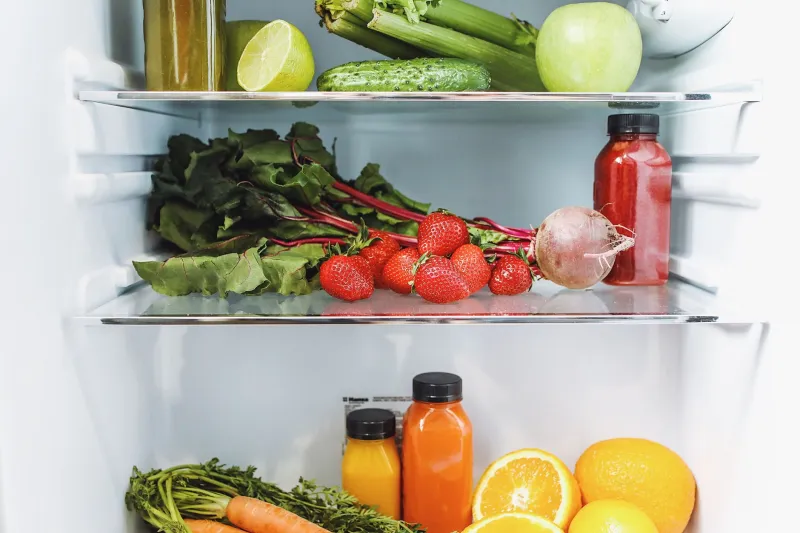
If your produce is dying faster than it should, the dates aren't the problem — your storage habits might be. Ethylene gas, produced by fruits like apples and bananas, accelerates ripening and decay in nearby vegetables. Storing your apples next to your leafy greens in the same crisper drawer is a fast track to wilted salad. Keep them separated.
Moisture management matters too. Most vegetables do best with some humidity but not soaking wet conditions. Pre-washed greens that sit in water at the bottom of a bag will rot in days. Line your crisper drawer with a dry paper towel to absorb excess moisture, and store greens unwashed until you're ready to use them.
Herbs are their own category entirely. Treat fresh herbs like flowers — trim the stems and stand them in a small glass of water in the fridge, loosely covered with a plastic bag. Parsley and cilantro stored this way can last two to three weeks, not the three to five days most people expect.
A Rough Guide to Real Timelines
Here's a more honest look at how long common vegetables actually last when stored correctly, regardless of what the package says:
- Carrots (whole): 3–5 weeks in the fridge
- Broccoli: 7–10 days (look for yellowing florets as the real signal)
- Bell peppers (whole): 2–3 weeks
- Cabbage (whole head): 4–6 weeks
- Kale/chard: 1–2 weeks (cook it when it wilts, don't trash it)
- Celery: 3–4 weeks
- Onions (whole, stored cool and dry): 2–3 months
- Winter squash: 1–3 months in a cool, dark spot
- Garlic (whole head): 3–6 months
None of these timelines require any special equipment. Just a reasonably cold refrigerator, thoughtful storage, and the willingness to use your senses instead of a date stamp.
Cook Like You Mean It
The most radical thing you can do in your kitchen right now is trust yourself over a label. The food industry has spent decades training American consumers to outsource their judgment to packaging — and it costs us money, generates mountains of waste, and disconnects us from the actual nature of the food we're cooking.
Vegetables grown in the ground, harvested at their peak, and stored with care are resilient things. A little age doesn't ruin them. It often makes them more interesting. That's not a compromise — it's just cooking.