One Day Makes All the Difference: The Precise Harvest Windows Supermarkets Don't Want You to Know About
Here's a question worth sitting with: when was the last time a vegetable genuinely surprised you? Not just "this is fine" surprised you, but stopped you mid-bite surprised you? If you're drawing a blank, there's a good chance the issue isn't your cooking. It's timing — specifically, the enormous gap between when a vegetable reaches its flavor peak and when it actually lands on your cutting board.
This isn't a farmers market sermon. It's a conversation about plant biology, distribution logistics, and the surprisingly narrow windows during which a vegetable is fully, completely, electrically itself.
The Biology of a Perfect Vegetable
Plants don't flip a switch from "not ready" to "ready." Ripening is a cascade of chemical events — sugars accumulating, starches converting, cell walls softening, volatile aromatic compounds developing. The tricky part? Many of these processes don't stop at peak flavor. They keep going. Which means a vegetable can sail through its prime in a matter of hours, not days.
Food scientist Dr. Marisol Fuentes, who studies postharvest physiology at UC Davis, puts it plainly: "Ethylene production, respiration rates, enzymatic activity — all of these are still happening after harvest. A lot of people think picking is the finish line. It's really just the starting gun on a new race."
That race has real stakes for flavor. The sugars in sweet corn, for instance, begin converting to starch almost immediately after harvest — some studies suggest up to 50 percent of sugar content can be lost within 24 hours at room temperature. This is why corn pulled from the stalk and eaten within the hour at a farm stand tastes almost unfairly good compared to the ear you grabbed at the grocery store on a Tuesday.
The Vegetables Most Home Cooks Consistently Misjudge
Zucchini and summer squash are perhaps the most dramatically mistimed vegetables in American kitchens. Most people wait until zucchini looks substantial — a good six or seven inches, maybe more. But many farmers and chefs will tell you the sweet spot is closer to four to five inches, when the skin is still tender, the seeds are barely formed, and the flavor is delicate and slightly sweet. Overgrown zucchini isn't just watery; it's actually a different vegetable from a flavor standpoint.
Peas follow a similarly unforgiving timeline. Fresh shell peas are transcendent for maybe a three-to-five day window after picking, then starch takes over and that grassy sweetness flattens out. This is why frozen peas — picked and frozen at peak — often genuinely outperform "fresh" peas at a grocery store that sourced them from two states away.
Eggplant runs the opposite risk. Pick it too early and the flavor is thin and slightly bitter in a hollow, uninteresting way. Wait until the skin has a deep, taut gloss and gives just slightly under pressure — that's when the interior flesh has developed the complexity that makes roasted eggplant taste almost meaty.
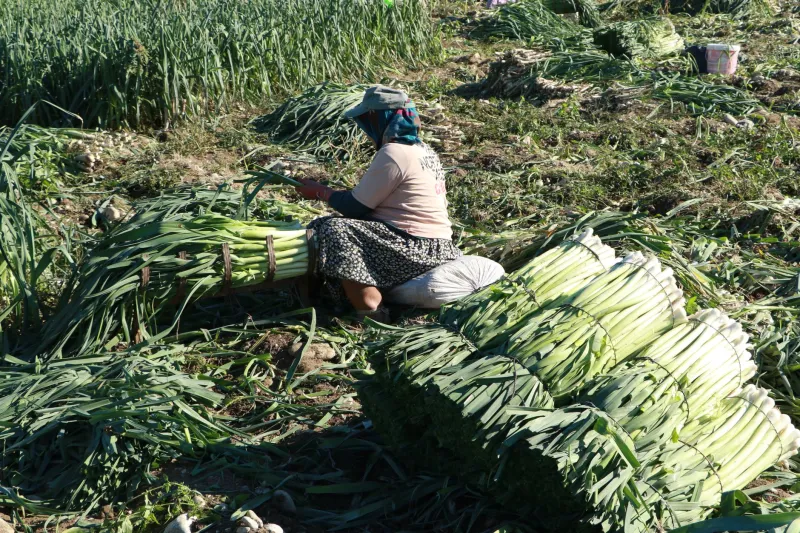
Garlic gets mishandled at both ends. Green garlic, harvested young, is mild, almost floral, and incredible raw or barely cooked. Cured garlic needs its full drying period to develop that concentrated pungency. Pull it too early from curing and you get a mushy, sharp, underdeveloped bulb that won't store and won't sing.
Why Supermarkets Almost Always Miss the Window
This is where logistics become the enemy of flavor. The average piece of produce in a US supermarket has traveled between 1,500 and 2,000 miles, according to the USDA. That journey takes time — and to survive it, most commercial produce is harvested before peak ripeness, when it's still firm enough to handle packing, shipping, and the retail display shelf life that stores require.
Tomatoes are the most famous casualty of this system. Commercial tomatoes are frequently harvested at what the industry calls "mature green" stage — technically mature but nowhere near ripe — then exposed to ethylene gas to trigger color development. The result looks like a tomato. It just doesn't taste like one. The flavor compounds that develop during vine-ripening simply weren't given the chance to form.
Produce distributor and longtime farmers market advocate James Whitmore, who works with small farms across the mid-Atlantic, is blunt about this: "The supply chain was built around shelf life, not flavor. Those are almost always in conflict. A tomato that tastes incredible has a three-day window. A supermarket needs seven to ten. You can't have both."
What Peak Ripeness Actually Looks (and Feels and Smells) Like
The good news is that your senses are genuinely useful here, if you know what to look for.
Smell is underused. A ripe cantaloupe smells like a ripe cantaloupe from across the farmers market table. Fragrant herbs at their peak have a volatility to them — you brush the leaves and the scent is immediate and intense. A head of basil past its moment smells slightly fermented, slightly dark.
Weight matters more than size. Dense, heavy vegetables relative to their size typically indicate good water content and full cellular development. A light eggplant, a hollow-feeling pepper — these are signs the vegetable is either past its peak or was grown under stress.
Texture at the surface tells a story. Peppers should feel taut and snap when you bite them, not give softly. Radishes should be firm to the point of feeling almost rigid. Lettuce should feel almost springy, like it has something to say.
Practical Ways to Actually Get There
You don't have to move to a farm. But a few shifts in how you shop and plan can close the gap significantly.
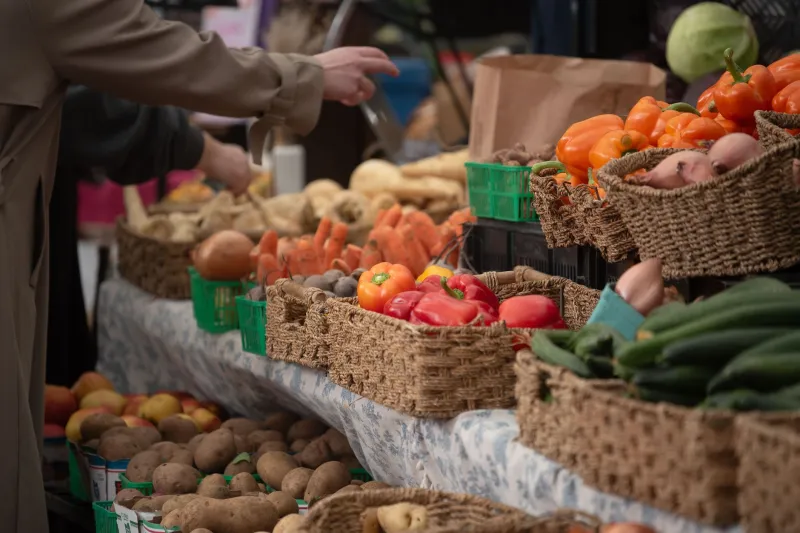
Buy from farmers markets or farm-share CSAs when you can, especially for the most timing-sensitive vegetables: corn, peas, tomatoes, summer squash. Ask vendors directly when things were picked — most will tell you, and many will steer you toward what's at its best that day.
For supermarket shopping, focus on vegetables where the harvest-to-shelf timing matters less: root vegetables, winter squash, alliums, and brassicas that have been properly stored. These have longer peak windows and hold their quality better through distribution.
And pay attention to seasonality, not just as an abstract virtue but as a practical flavor strategy. A tomato in August is a completely different proposition than a tomato in February, regardless of where you buy it. Eating within season is, at its core, eating closer to the harvest window — which means eating closer to the flavor.
That mid-bite surprise? It's still out there. It just requires a little more attention to timing.