Cook Like Nobody's Watching: Breaking the Vegetable Anxiety Spiral
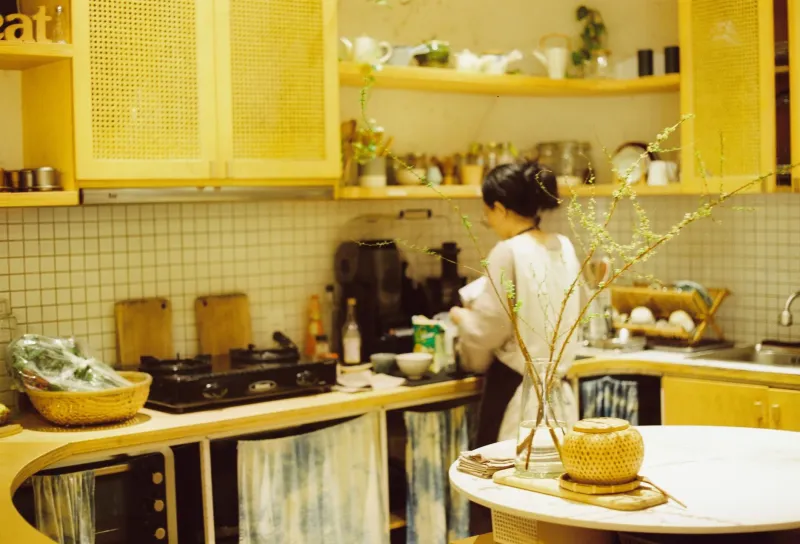
Let's talk about the cook you become when no one's around.
Maybe it's a Tuesday night. You've got a sad bunch of kale, some leftover roasted beets, a lemon that's seen better days, and a jar of tahini you bought on a whim. No recipe. No plan. Just instinct and hunger. And somehow — somehow — you pull together something that makes you stand over the sink and eat it straight from the pan because it's that good.
Now imagine doing that same thing for six people on a Saturday night.
Suddenly you're googling "kale salad recipe" at 4pm, second-guessing everything, and reaching for the most crowd-pleasing, least-controversial vegetable preparation you can find. Roasted broccoli with olive oil and salt. Again. Safe. Predictable. Fine.
This is the vegetable confidence gap. And it affects more home cooks than you'd think.
What's Actually Happening When the Pressure Goes Up
Cooking for yourself is essentially a low-stakes experiment. You're the only judge. If the eggplant gets a little too charred, you eat it anyway — maybe even enjoy the drama of it. But cooking for others activates a completely different part of your brain. Suddenly, you're not a cook; you're a host. And hosts, our culture tells us, do not experiment. Hosts deliver.
Food psychologists have a term for this kind of performance anxiety: social evaluation threat. It's the same mechanism that makes people blank out during job interviews even when they know every answer cold. Your actual skill set hasn't changed. What's changed is the perceived consequence of failure.
For vegetable-forward cooks, this is especially loaded. There's still a cultural undercurrent in the US that treats vegetables as the supporting cast — the thing you have to explain or justify. "I promise this is actually good," you hear yourself saying before anyone's even tasted it. You've already apologized. You've already hedged.
And that apology? It changes how you cook. You start pulling punches.
The Recipes You Default To (And Why)
When anxiety takes over, most home cooks retreat to a very short list of "safe" vegetable preparations. Roasted root vegetables. Simple salads with vinaigrette. Sautéed greens with garlic. These aren't bad dishes — they're genuinely good. But they're also the culinary equivalent of wearing a plain white shirt because you can't decide what to wear. Reliable. Invisible. Not really you.
What gets abandoned in these moments is the intuitive stuff: the unexpected flavor pairings you've been quietly perfecting, the technique you read about and tried three times until it clicked, the weird ingredient combination that shouldn't work but absolutely does. All of that gets shelved because it feels too risky to explain.
The irony is that the dishes you make instinctively — the ones born from curiosity rather than a recipe — are usually the ones that generate the most conversation at a table. "Wait, what is this?" is a better compliment than "Oh, roasted broccoli, classic."
Strategies for Trusting Your Palate in Public
Rehearse the dish once for yourself first. If you've been wanting to try a miso-glazed delicata squash for company, make it on a Wednesday for yourself. Eat it. Adjust it. By the time Saturday rolls around, it's not an experiment — it's a recipe you've already made. The anxiety shifts dramatically when you have a data point.
Name the dish with confidence. There's a reason restaurant menus don't say "roasted stuff with sauce." Language signals intention. "Charred leeks with walnut cream and herbs" sounds like a choice you made on purpose — because you did. When you give your dish a name, even a casual one, you're framing it as something deliberate rather than something you stumbled into.
Stop front-loading the apology. This one's harder than it sounds. We're so conditioned to manage expectations around vegetables that we often undermine ourselves before the food hits the table. Resist it. Let the dish speak first.
Bring one "anchor" dish and one "you" dish. If cooking for a crowd feels high-stakes, don't overhaul the whole menu. Keep one or two things that you know are crowd-pleasers — the roasted carrots, the simple green salad — and let yourself go somewhere interesting with one dish. One dish is enough to remind you (and your guests) who you actually are in the kitchen.
Talk about the food while you cook, not before it's done. Instead of warning people that "this might be weird," invite them into the process. "I'm doing something with blistered shishitos and preserved lemon tonight — I'm curious to see how it turns out." Framing it as an adventure rather than a gamble changes the entire energy.
The Deeper Thing Going On
Here's the part that's worth sitting with: the vegetable confidence gap isn't really about vegetables. It's about permission.
Somewhere along the way, a lot of us absorbed the message that bold, creative vegetable cooking is a niche thing — a restaurant thing, a food-nerd thing, not something you just do for regular people at a dinner party in Ohio. And that message is worth rejecting pretty aggressively.
The cooks who consistently make vegetables the most exciting part of a meal — the ones whose dinner parties people talk about for weeks — aren't necessarily more skilled than you. They've just decided that their instincts are worth trusting in front of an audience, not just in private.
The late-night-kale version of you? That cook is the real one. The goal is to let them out on Saturday night too.
A Small Practice for This Week
Pick one dish you'd normally only make for yourself — something that feels a little too weird or too personal or too risky for company — and make it for someone else. Not a dinner party. Just one other person. A partner, a roommate, a friend who comes over on a weeknight.
See what happens. Nine times out of ten, they're going to ask you to make it again.
That's the data point you need.