Spend Smart, Eat Better: The Real Economics of Buying Vegetables Without Losing Your Mind
Let's be honest about something: most vegetable advice is written by people who don't flinch at $7 heirloom tomatoes. The food media ecosystem is full of gorgeous, aspirational produce content that quietly assumes you have a farmers market within walking distance, a generous grocery budget, and the kind of lifestyle where composting feels like a hobby rather than a chore.
Most of us are not those people.
Most of us are standing in the produce aisle on a Tuesday evening, trying to figure out whether that bag of pre-washed spinach is a good deal or just convenient packaging for something that'll be slime by Thursday. And we deserve a guide written for that reality.
This is that guide.
The Waste Problem Is Also a Budget Problem
Before we talk about where to spend, let's talk about where money actually disappears. The USDA estimates that the average American household throws away somewhere between 30 and 40 percent of the food it buys. A significant chunk of that is produce — the bunch of cilantro you needed one tablespoon of, the zucchini you bought with ambition and forgot entirely, the kale that went yellow before you could convince yourself to make the salad.
The most expensive vegetable isn't the fancy one at the farmers market. It's the cheap one you bought and never ate.
So the first move in building a smarter vegetable budget isn't about finding better prices. It's about buying less and using more. That sounds obvious, but it runs counter to every grocery store design principle — the wide aisles, the abundant displays, the buy-two-get-one deals that only make sense if you actually need two.
Start by auditing your crisper drawer before you shop. Not as a guilt exercise, but as inventory. What's still good? What needs to be used today or tomorrow? Build your week's cooking around what's already there, and buy to supplement rather than to restart.
Where to Splurge (And Why It's Actually Worth It)
Not all vegetables are created equal when it comes to the quality gap between cheap and premium. Some things genuinely taste better when you spend more. Others? The difference is mostly aesthetic.
Tomatoes in season: This is the one place where spending more — whether at a farmers market or a local farm stand — pays off dramatically. A $4 heirloom tomato in July is a completely different food than a $1.50 grocery store tomato in February. The flavor compounds that make a tomato worth eating don't survive industrial cold-chain storage. When tomatoes are in season in your region, buy the good ones. Eat them like a meal, not a garnish.
Leafy greens: Here, the quality gap narrows considerably. Unless you're eating them raw in a salad where texture and bitterness matter, the difference between a $3 bunch of kale from the farmers market and a $2.50 bunch from a standard grocery store mostly disappears once heat is applied. Spend less here, cook confidently.
Root vegetables: Carrots, parsnips, turnips, beets — these are where value and quality genuinely align. Cheap, shelf-stable, deeply nutritious, and almost impossible to mess up. A two-pound bag of carrots for under $2 is one of the best deals in the American grocery store, full stop. Buy them often. Roast them at high heat with olive oil and salt and watch them become something remarkable.
Fresh herbs: Buy less, use more, and consider growing a pot of the ones you use constantly (basil, parsley, chives). A four-dollar clamshell of herbs that you use one tablespoon from before the rest goes dark is a terrible investment. A $3 pot of living basil on your windowsill lasts weeks.
The Value-to-Flavor Ratio: A Practical Framework
Think about vegetables in terms of how much flavor they deliver per dollar spent. This isn't a precise science, but it's a useful mental model.
High value, high flavor: Cabbage, onions, garlic, dried beans (technically legumes, but relevant), frozen corn and peas, canned tomatoes (yes, canned — during off-season, they beat fresh), sweet potatoes, and winter squash. These are the foundation of excellent, affordable vegetable cooking. They're not trendy, but they're deeply reliable.
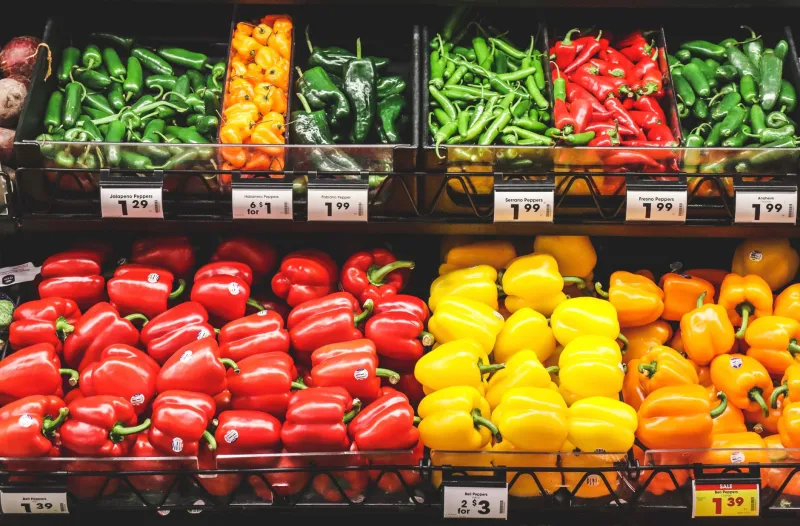
Medium value, medium-high flavor: Bell peppers, broccoli, cauliflower, zucchini, green beans, and leeks. These hit their stride when they're in regional season and priced accordingly. Watch for them to go on sale and build meals around those windows.
Lower value, context-dependent: Pre-cut vegetables, exotic or imported specialty produce, and anything marketed as a superfood with a corresponding markup. The convenience of pre-cut vegetables is real, but you're paying a significant premium for it. If that trade-off works for your schedule, make it deliberately rather than by default.
Shopping Strategy: Where You Buy Matters as Much as What You Buy
Farmers markets are wonderful, but they're not the only path to quality produce. Here's a more honest map of your options:
Ethnic grocery stores — particularly Asian, Latin, and Middle Eastern markets in most mid-sized American cities — often carry a wider variety of produce at significantly lower prices than mainstream grocery chains. The quality is frequently excellent because turnover is high and the customer base actually cooks with these vegetables. Bok choy, bitter melon, tomatillos, fresh turmeric, banana blossoms: all of these are cheaper and often fresher here than at Whole Foods.
Grocery store clearance sections are underrated. Many stores mark down produce that's approaching its best-by date. This is ideal for anything you're planning to cook that day or the next — the flavor is still there, and the price is substantially lower.
Frozen vegetables deserve genuine rehabilitation. Frozen peas, edamame, corn, spinach, and green beans are typically processed within hours of harvest, which means their nutritional profile and flavor often outperform the fresh versions that have been sitting in transit for a week. They're not a compromise. They're a smart choice.
Building Your Weekly Vegetable Budget
Here's a rough framework that actually works for a household of two to four people:
Set a baseline. Decide what you're willing to spend on vegetables each week — let's say $30 to $40 as a reasonable starting point. Allocate roughly half of that to your staple, high-value vegetables: onions, garlic, a bag of carrots, a head of cabbage, sweet potatoes. These will form the backbone of most of your weeknight cooking.
Use the remaining half for seasonal, higher-quality purchases — whatever looks good at the market or the grocery store that week, whatever's on sale, whatever you're in the mood to cook. This keeps your diet varied without requiring a rigid meal plan that you'll abandon by Wednesday.
The goal isn't perfection. It's a system that creates less waste, more variety, and the occasional genuinely great meal — without requiring you to spend like a food writer or shop like a restaurant chef.
You're allowed to eat well on a real budget. The vegetables are ready when you are.