Growing Where You Shouldn't: How Climate Chaos Is Quietly Rewriting the American Produce Map
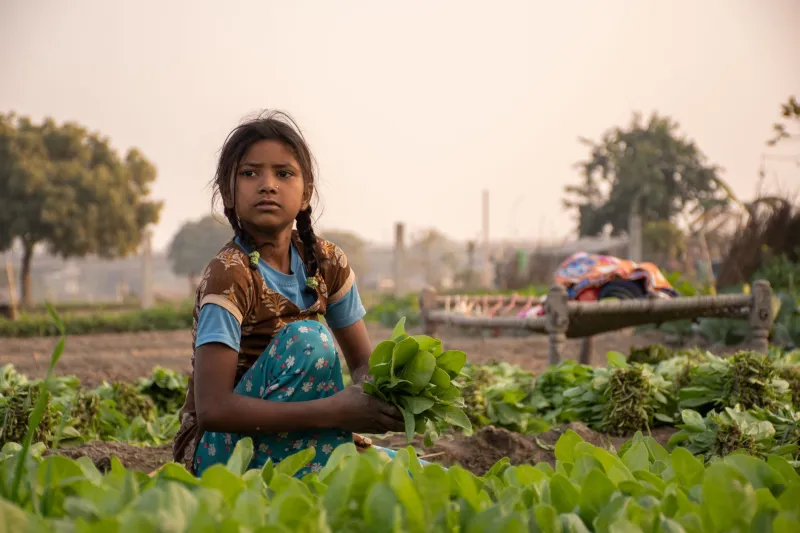
Something strange is happening at farmers markets across the country. In Vermont, a grower is selling Shishito peppers she harvested from a field that, ten years ago, would have been too cold to ripen them. In Minnesota, a third-generation farmer is coaxing eggplant out of soil his grandfather would have written off entirely. And in coastal Maine, a small cooperative is experimenting with sweet potatoes — a crop that once belonged firmly to the American South.
This isn't a fluke. It's a quiet revolution, and it's reshaping what ends up on your plate.
The Map Is Moving — Literally
The USDA Plant Hardiness Zone Map, that familiar color-coded guide farmers and home gardeners have relied on for decades, was updated in 2023 for the first time since 2012. The verdict? Nearly half of the country shifted into a warmer zone. What that means in practical terms is that the invisible lines separating "this crop belongs here" from "this crop doesn't" are on the move.
For vegetable growers, those lines have always been sacred. They dictated planting schedules, varietal choices, and the entire logic of regional agriculture. A farmer in upstate New York knew she was growing apples and brassicas, not watermelons. A grower in Georgia knew his summers were for tomatoes, not the cool-season lettuces that thrived further north. That certainty is dissolving.
Average first and last frost dates are shifting by days, sometimes weeks. Growing seasons in northern states are stretching longer. And the crops that once demanded southern heat are following the warmth northward, while the cool-weather vegetables that defined places like the Pacific Northwest are getting squeezed by increasingly brutal summer temperatures.
Farmers Who Are Leaning Into the Uncertainty
For some growers, the instinct is to resist — to keep planting what their families always planted and hope the climate settles back into something familiar. But a growing number are doing something braver: treating the disruption as an invitation.
Take a small diversified farm in the Finger Lakes region of New York. The family has been growing vegetables there for three generations. In the past five years, they've added Jimmy Nardello peppers, Armenian cucumbers, and a handful of Southern Italian heirloom tomatoes to their rotation — varieties that used to require a longer, hotter season than western New York could reliably deliver. Now, with growing seasons pushing closer to 160 frost-free days in some years, those crops are not just surviving — they're thriving.
"We're not celebrating the climate changing," one farmer explained in a recent conversation with a regional agricultural cooperative. "But we'd be foolish not to adapt. Our job is to feed people and keep this land productive. If that means learning new crops, we learn new crops."
That kind of pragmatic openness is showing up across the country. In the upper Midwest, farmers who once focused almost exclusively on cool-season crops like cabbage, kohlrabi, and beets are experimenting with heat-loving varieties. In the Pacific Northwest, where mild, wet summers once made growing conditions predictably gentle, growers are pivoting toward drought-tolerant Mediterranean vegetables — fennel, radicchio, dry-farmed tomatoes — as summer rainfall becomes less reliable.
The Heirloom Angle: Old Seeds, New Places
Here's where it gets genuinely exciting for anyone who cares about flavor and food diversity. The crops finding new homes in unexpected climates aren't just commodity vegetables. Many of them are heirloom and heritage varieties — the kind of deeply flavorful, visually striking produce that industrial agriculture largely abandoned in favor of uniformity and shelf life.
When a farmer in Vermont decides to try growing Anaheim chiles or a grower in Michigan experiments with Mortgage Lifter tomatoes in a region that couldn't reliably ripen them before, they're not just adding new crops to their fields. They're expanding the genetic and culinary diversity of what's available at local markets, farm stands, and CSA boxes.
Seed libraries and regional seed-saving organizations are paying close attention. Groups like Seed Savers Exchange have long documented the importance of preserving heirloom varieties, but the current climate moment is adding a new urgency — and a new opportunity. Varieties that were hyper-regional, grown only in specific microclimates for generations, are now candidates for cultivation in places they've never been tried before.
The flip side is real, though. Some of the cool-season heirlooms that defined northern agriculture — certain lettuces, specific varieties of spinach and arugula, heritage cabbages bred for cold resilience — are facing pressure as the windows for growing them narrow. Preserving those varieties matters just as much as celebrating the new arrivals.
What This Means for Home Gardeners
If you're growing vegetables at home, this moment is honestly kind of thrilling — if you're willing to embrace a little experimentation.
The practical upshot of shifting hardiness zones is that your garden's potential has quietly expanded. If you're in Zone 6 and you've always assumed sweet potatoes were out of reach, it might be worth trying a slip or two this summer. If you're in the northern half of the country and you've written off growing peppers from seed because your season felt too short, check your updated zone and reconsider.
A few things worth keeping in mind as you experiment:
Start small and document everything. Treat your garden like a living record. Note what you planted, when you started seeds, when you transplanted, how the season unfolded, and what the harvest looked like. That data — even informal, scribbled-in-a-notebook data — is genuinely valuable.
Seek out regionally adapted seed sources. National seed catalogs are great, but smaller regional seed companies and local seed libraries often carry varieties selected for performance in specific climates. If you're in the upper Midwest and you want to try a heat-loving crop, look for seed sources that have been trialing those varieties in comparable conditions.
Connect with your local extension office. The USDA Cooperative Extension system is one of the most underutilized resources for home gardeners in America. Extension agents are tracking exactly these kinds of shifts in regional growing conditions and can tell you what local farmers are experimenting with.
Don't abandon your cool-season staples. The reshuffling isn't eliminating cool-season growing — it's changing the windows. In many parts of the country, fall has become the more reliable season for lettuces, brassicas, and root vegetables as spring arrives earlier and more erratically.
The Bigger Picture on Your Plate
There's something bittersweet about all of this, and it's worth sitting with that for a moment. The agricultural reshuffling happening across the country is driven by climate disruption — a genuinely serious and ongoing crisis. The farmers adapting are doing so out of necessity as much as curiosity.
But within that disruption, there's a real opportunity for American food culture to become more diverse, more regionally specific, and more interesting. The tomato that couldn't ripen in Vermont ten years ago and now can is a small, complicated miracle. The okra showing up at Ohio farmers markets for the first time is a conversation starter about how much is changing — and how much creativity human beings bring to that change.
At Sweet Artichoke, we're here for the vegetables, wherever they decide to grow. And right now, they're growing somewhere new.
