Forget Everything You Know About Pairing Vegetables: The Flavor Chemistry That Actually Holds Up
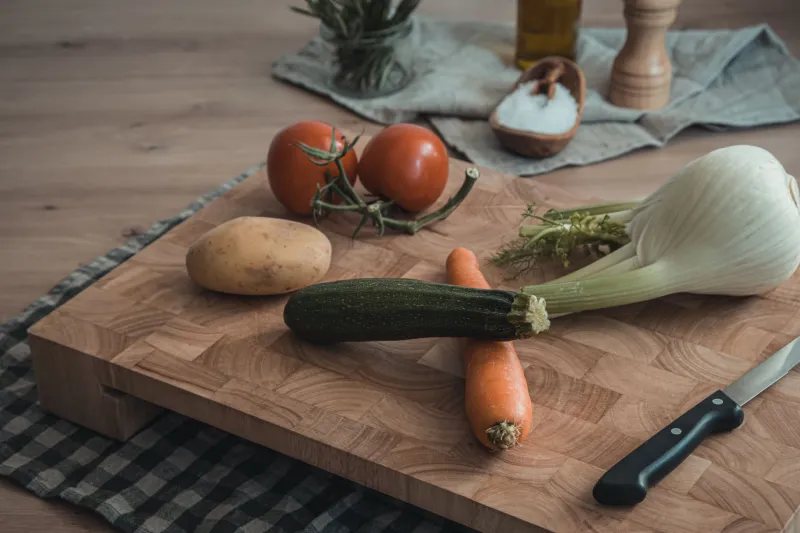
Let's start with a small confession: the first time someone served me roasted beets with raw fennel and a scattering of toasted walnuts, I was skeptical in the way you're skeptical of a band your friend won't stop talking about. Then I tried it. The anise sharpness of the fennel cut through the beet's earthiness in a way that somehow made both ingredients taste more like themselves. It was one of those moments that quietly rewires how you think about what belongs on a plate together.
Most of us learn vegetable pairings from cookbooks, restaurant menus, and food culture at large — and most of those sources are drawing from the same well of tradition. Carrots and peas. Corn and zucchini. Tomato and basil. These are fine. Some of them are genuinely great. But they're also often the beginning and end of the conversation, when the actual science of flavor affinity suggests there's a much wilder, more interesting landscape waiting just past the familiar.
How Flavor Pairing Actually Works
Flavor isn't just taste — it's the interaction between taste (what your tongue registers) and aroma (what your nose processes, accounting for roughly 80 percent of what we perceive as flavor). Aromatic compounds, called volatile molecules, are what give vegetables their characteristic smells and much of their flavor identity.
The flavor pairing theory, popularized in part by Belgian chef Heston Blumenthal's collaborations with food scientist François Benzi, proposes that ingredients sharing key volatile compounds tend to taste harmonious together. It's why coffee and garlic, improbable as they sound, share certain pyrazine compounds and can work in savory applications in ways that shouldn't make sense but do.
For vegetables specifically, this framework opens up some genuinely surprising territory.
The Pairings That Outperform the Classics
Beets and coffee. Both contain earthy, slightly bitter compounds — geosmin in beets (the same compound responsible for that petrichor smell after rain), and pyrazines and chlorogenic acids in coffee. Roast beets with a coffee rub, or finish a beet salad with a tiny amount of cold brew in the dressing, and the effect is depth without heaviness. The bitterness of the coffee doesn't fight the beet's sweetness; it frames it.
Cauliflower and brown butter with capers. This one has been creeping into restaurant menus for good reason. Cauliflower's nutty, slightly sulfurous compounds amplify when roasted at high heat, and brown butter — with its own array of Maillard reaction compounds — harmonizes with those roasted notes in a way that makes the cauliflower taste almost like it has been enriched from within. Capers add a brine and a slight floral bitterness that keeps the whole thing from becoming heavy.
Sweet potato and miso. The Maillard browning compounds in roasted sweet potato share characteristics with fermented soybean's amino acid profile. Together, they create a layered umami that goes well beyond what either ingredient achieves alone. Spread white miso on halved sweet potatoes before roasting and you'll understand immediately.
Corn and shishito peppers. Both contain similar grassy, slightly sweet pyrazine compounds. Together, especially charred, they build on each other's sweetness while the shishito's occasional heat adds an unpredictability that makes the combination feel alive.
The Classic Pairings That Don't Quite Hold Up
Here's where it gets a little heretical.
Tomato and cucumber in a salad. This is a cultural institution, not a flavor marriage. The problem is mostly textural and moisture-based: cucumbers release water aggressively, diluting the tomato's natural acidity and sweetness, and the two compete for attention without really enhancing each other. They're pleasant together, but they're also both better with different partners. Tomatoes with stone fruit — peaches, nectarines — share aromatic compounds that create genuine synergy. Cucumbers with fresh herbs and a sharp vinegar are a revelation on their own.
Peas and carrots. This pairing is so entrenched it comes frozen together in a bag. Texturally they make sense — both are small, both cook at similar rates. But from a flavor standpoint, they're two sweet vegetables doing essentially the same thing. Neither brings contrast or amplification to the other. Peas with a sharp, slightly bitter element — mint, lemon zest, arugula — actually develop their sweetness more fully because there's something to push against.
Zucchini and tomato in a ratatouille. I know. But hear me out. Zucchini's mild, watery character tends to get overwhelmed by tomato's acidity and intensity. The traditional ratatouille works because of the technique (slow cooking, fat, layering), not because zucchini and tomato are natural partners. Zucchini actually shines more clearly alongside corn, fresh herbs, and olive oil, where its delicacy isn't drowned out.
A Methodology for Experimenting at Home
You don't need a flavor chemistry database to start exploring this. Here's a practical framework:
Think in contrasts, not just similarities. Shared compounds create harmony, but contrast creates interest. A sweet vegetable paired with something bitter (roasted carrots with radicchio) or something acidic (roasted beets with a sharp vinegar) often tastes more dynamic than two sweet vegetables together.
Char as a unifier. High heat browning creates similar Maillard compounds across very different vegetables. This is why a plate of mixed charred vegetables — peppers, onions, eggplant, tomatoes — often tastes more cohesive than a raw or lightly cooked version of the same lineup. Char creates a shared flavor language.
Start with aroma. Before you cook, smell your ingredients together. Hold a sprig of tarragon next to a fennel frond. Crush a little fresh corn next to a shishito pepper. Your nose will often tell you something useful before the pan even gets hot.
Introduce one wild card at a time. Don't rebuild your entire dish around a new pairing concept. Take a combination you already like and swap one element for something unexpected. Roasted carrots with tahini instead of butter. Sautéed spinach finished with a little miso instead of salt. Small experiments build intuition faster than wholesale reinvention.
The point isn't to abandon the classics — it's to hold them a little more lightly, and stay curious about what else might be possible when you let flavor chemistry, rather than habit, lead the way.