Your Grandmother's Vegetable Techniques Are Having a Moment — and Honestly, It's Overdue
There's a restaurant in Charleston, South Carolina where the chef buries whole onions directly in the coals of a wood-burning hearth and leaves them there. Not for ten minutes. For most of an hour. What comes out doesn't look like much — blackened, papery, almost geological. But split one open and the inside is a completely different substance: silky, deeply sweet, almost jammy, with a smokiness that doesn't taste added so much as revealed. It tastes like an onion that finally got to become fully itself.
This is not a new technique. It's one of the oldest. And it's showing up on menus across the country right now, alongside salt-baked beets, fat-braised leeks, hay-smoked carrots, and underground-cooked root vegetables — a quiet wave of culinary archaeology that's rediscovering methods that home cooks, grandmothers, and field workers used long before professional kitchens had temperature-controlled ovens and immersion circulators.
The irony is that these techniques, once dismissed as primitive or unsophisticated, are producing some of the most complex vegetable flavors anyone is cooking right now.
Why These Methods Got Lost in the First Place
The short version: convenience won. The mid-20th century was a period of aggressive modernization in American kitchens — gas and electric ranges became standard, processed foods promised efficiency, and techniques that required hours of unattended cooking or specialized equipment (like a wood fire or a salt crust) got quietly shelved in favor of faster, more controllable methods.
The longer version involves class and labor. Many of these traditional techniques — braising in fat, slow cooking in clay, ash-roasting — were associated with rural, poor, or working-class cooking traditions. As American food culture aspired upward, these methods got left behind. Efficiency was aspirational. Slowness was not.
"There's a real pattern here," says culinary historian and cookbook author Delia Ramos, who has spent years documenting Appalachian and Southern foodways. "The techniques that got abandoned were often the ones that came from communities with the least cultural power. Now that fine dining has 'discovered' them and put them on $28 plates, suddenly they're interesting again. The knowledge was always there — it just wasn't valued."
Salt-Baking: The Technique That Sounds Wasteful and Isn't
Salt-baking is exactly what it sounds like: you pack a vegetable — whole, unpeeled — in a thick crust of salt (usually mixed with egg white and sometimes herbs to help it bind) and bake it at high heat. The salt crust creates a sealed, steam-rich environment that cooks the vegetable gently and evenly from all sides while intensifying flavor through concentration.
The result is almost alarmingly good. Salt-baked beets develop a sweetness that roasting can't quite match. Salt-baked celery root becomes tender throughout, with none of the uneven cooking you get in a conventional oven. Salt-baked potatoes have a skin that practically papers off and an interior that's creamy in a way that transcends what "baked potato" usually means.
The technique works because salt is a surprisingly good insulator and moisture regulator. It prevents the rapid surface evaporation that causes vegetables to dry out or char unevenly, while still allowing internal temperature to rise gradually to the point where starches fully convert and sugars caramelize without burning.
At home, it's more accessible than it sounds. A basic salt crust is two cups of kosher salt, one egg white, and enough water to make a packable dough. Encase your vegetable, bake at 400°F, and crack it open at the table. The reveal is genuinely theatrical, which doesn't hurt.
Ash-Roasting: Controlled Chaos That Pays Off
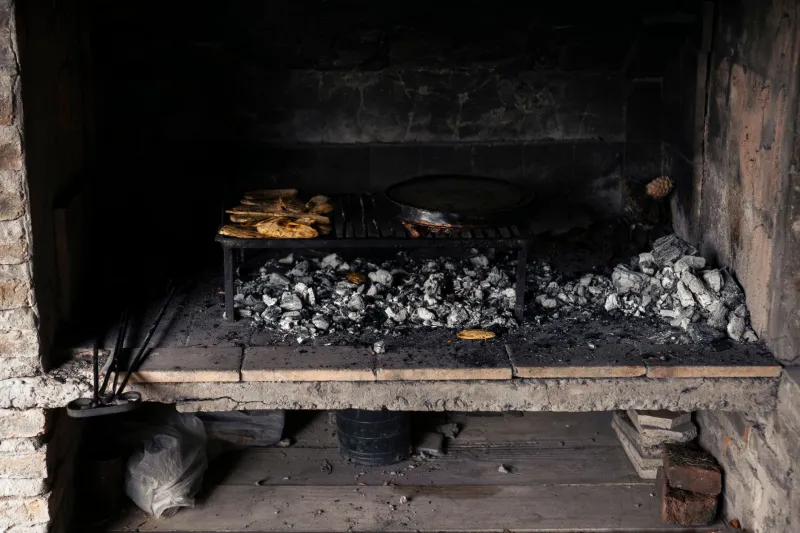
Ash-roasting is older than ovens. Before there were controlled heat sources, there was fire, and after the fire died down, there were coals and ash — a perfect, slow, ambient heat environment that cooks gently and imparts a distinctive mineral smokiness that no modern appliance has successfully replicated.
Chef Marcus Okafor, who runs a vegetable-focused tasting menu in Portland, Oregon, has built part of his kitchen philosophy around ash-based techniques. "Ash isn't just heat," he explains. "It's a specific kind of alkaline environment. It affects the surface chemistry of the vegetable in ways that change the flavor. You get this subtle minerality, almost like the vegetable absorbed something from the earth. Which, in a way, it did."
Practically speaking, ash-roasting at home requires a fireplace, a wood-burning grill, or a charcoal setup — not something every apartment cook has access to. But for those who do, the technique is transformative for dense root vegetables, alliums, and winter squash. Nestle whole vegetables directly in the coals (not the flame), turning occasionally, and pull them when they're soft all the way through. The exterior will be charred and inedible; the interior will be something extraordinary.
Fat-Braising: The Technique Your Grandmother Called Confit
Slow-braising vegetables submerged in fat — olive oil, duck fat, lard, or butter — is a technique with deep roots in French and Mediterranean cooking, but versions of it appear across cultures wherever people cooked over low heat for long periods. The French call it confit. Your grandmother might have just called it "cooking the leeks down in butter until they were done."
The science is straightforward: fat conducts heat gently and evenly, and because it doesn't evaporate the way water does, the vegetable cooks in a stable, controlled environment. Flavor compounds that would normally escape with steam are instead retained in the fat itself, which then coats and permeates the vegetable. The result is a richness and depth that water-based cooking simply can't achieve.
Confit garlic — whole cloves slow-cooked in olive oil at around 200°F for an hour — is one of the most transformative applications of this technique for home cooks. The garlic becomes spreadable, sweet, and mellow, and the oil it cooks in becomes one of the most useful things in your refrigerator. Leeks braised slowly in butter until they collapse into silky ribbons. Fennel submerged in olive oil with a few aromatics and cooked until completely tender. These are techniques that reward patience in ways that feel almost disproportionate to the effort involved.
Bringing It Home
None of this requires a wood-fired hearth or a Michelin-starred kitchen. It requires time, a little curiosity, and the willingness to trust methods that have been working for centuries.
Start with fat-braised garlic this week. Then try a salt-baked beet. If you have a charcoal grill, bury an onion in the dying coals after your next cookout and see what you find in the morning. These aren't nostalgic exercises — they're genuinely effective techniques that produce flavors your sheet pan, however reliable, simply cannot replicate.
The oldest methods often persist because they work. It just took fine dining a few decades to remember that.