From Garnish to Glory: How Fine Dining Finally Put Vegetables in Charge
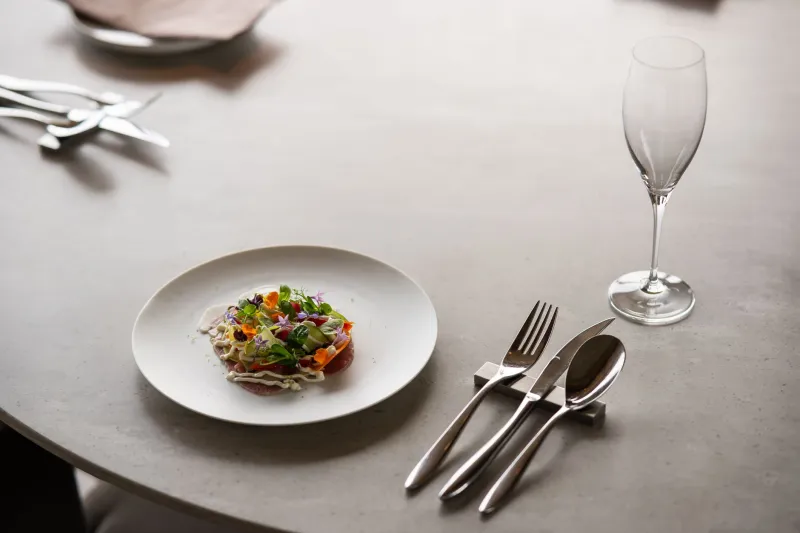
Not long ago, ordering the vegetarian option at a fancy restaurant felt like a consolation prize. You'd get a beautiful plate, sure — artfully arranged, probably involving a smear of something and a microgreen — but everyone at the table knew the real action was happening with the duck breast. That era is quietly, decisively over.
Across the country, from the tasting menus of New York and San Francisco to the farm-driven dining rooms of Asheville and Portland, a genuine vegetable renaissance is underway. Chefs who built their reputations on pristine proteins are now centering their most ambitious cooking around a single roasted beet or a bowl of lovingly braised lentils. And the food world is paying attention.
Why Chefs Are Ditching the Protein-First Playbook
The shift didn't happen overnight, and it isn't just about dietary trends or sustainability optics — though both play a role. It's fundamentally about what's interesting to cook right now.
For a generation of chefs who came up obsessing over sourcing, technique, and terroir, vegetables have become the most intellectually exciting ingredient in the kitchen. A heritage pork chop is a heritage pork chop. But a Hakurei turnip pulled from the ground last Tuesday, cooked in three different ways on the same plate, tells a story that no loin can match.
Chefs like Dan Barber of Blue Hill at Stone Barns in New York have been making this argument for years. His restaurant doesn't just serve vegetables — it builds entire narratives around what the farm is producing that week. A course might be nothing more than a single variety of dry-farmed corn, prepared in ways that reveal its sweetness, its starchiness, its surprising depth. It sounds minimal. It tastes like a revelation.
Similarly, at restaurants like Quince in San Francisco or Boka in Chicago, the vegetable courses have quietly become the ones guests talk about most. Not the wagyu. The roasted celeriac with hazelnut cream. The barely-wilted pea shoots floating in a dashi so delicate it barely registers as a liquid.
What's Actually Happening on Those Plates
Here's where it gets useful for the rest of us cooking at home on a Tuesday night.
The techniques driving vegetable-forward fine dining aren't mysterious. They're disciplined applications of methods that any home cook can learn — and steal without guilt.
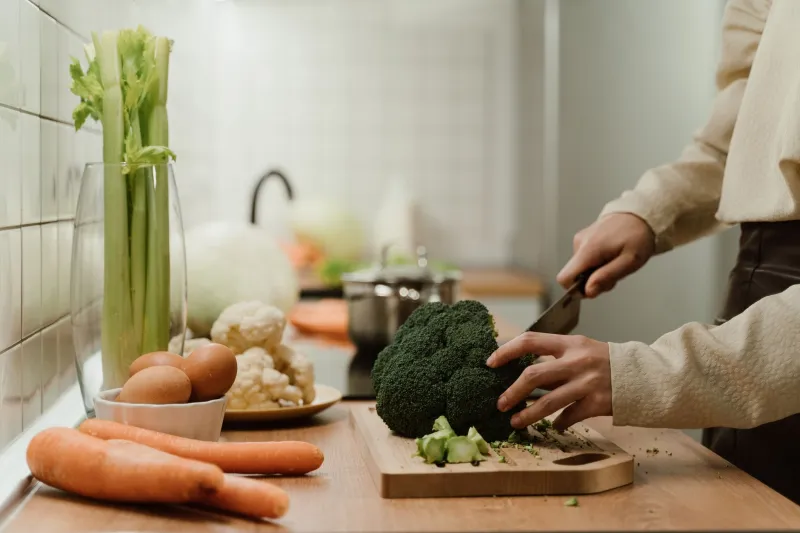
Building flavor in layers. Restaurant kitchens rarely cook a vegetable in one step. A carrot might be roasted until deeply caramelized, then finished in a brown butter bath, then hit with a splash of good vinegar right before plating. Each stage adds a dimension — sweetness, richness, brightness — that a single cooking method can't achieve alone. At home, this means getting comfortable with the idea of treating vegetables like a project rather than an afterthought.
Using every part. Fine dining kitchens are almost obsessively zero-waste, not just for environmental reasons but because the trimmings often hold the most intense flavor. Corn cobs become stock. Fennel fronds become oil. Beet greens get quickly sautéed and served alongside the roasted root. This approach forces creativity and rewards attention. If you're peeling a vegetable and throwing away the skin, ask yourself whether you could roast those peels until crispy and use them as a garnish instead.
Controlling texture with intention. One of the clearest differences between restaurant vegetable cookery and home cooking is textural contrast. Great vegetable dishes almost always have something silky, something with a little resistance, and something with a crunch. Think of it as a three-part harmony. A purée of roasted parsnip might be topped with thinly shaved raw parsnip and a scatter of toasted seeds. Same vegetable, three completely different experiences in a single bite.
Plating with negative space. This one is purely aesthetic, but it matters more than people think. Restaurant chefs know that what you leave off the plate is as important as what you put on it. A single spoonful of vibrant green pea purée, placed deliberately off-center on a wide white plate, looks intentional and beautiful. The same purée smeared across the whole plate looks like a mess. At home, resist the urge to fill every inch of the bowl.
The Flavor-Building Secret Most Home Cooks Miss
If there's one technique that separates fine dining vegetable cookery from the home kitchen, it's the use of layered umami — building savory depth without relying on meat-based stocks or heavy cream.
Chefs are doing this through fermentation (a miso glaze on roasted cabbage, a drizzle of aged balsamic), through careful charring that creates bitter, complex edges, and through what some call "vegetable stocks that actually taste like something." The difference between a stock made from barely-simmered vegetable scraps and one made from deeply roasted, caramelized aromatics is not subtle. One tastes like pale water. The other tastes like the floor of a forest in October — in the best possible way.
At home, an easy entry point is keeping a jar of good miso in your fridge and using it the way chefs use demi-glace: sparingly, as a finishing agent that adds instant savory complexity. Whisk a teaspoon into a pan sauce, stir it into a braising liquid, or blend it into a butter that you melt over roasted vegetables at the last second. It's not a cheat. It's a technique.
What This Means for How We Think About Vegetables
The fine dining world's embrace of vegetable-forward cooking isn't a fad, and it's not going to reverse itself when the next protein trend comes along. It represents something more fundamental: a recalibration of what "impressive" cooking actually looks like.
For decades, American culinary culture used expensive proteins as a shorthand for ambition and skill. A perfectly seared scallop signaled technique. A dry-aged ribeye signaled investment. Vegetables, by contrast, were easy. They were cheap. They were what you made when you weren't really trying.
That assumption is being dismantled in real time, by some of the most talented cooks in the country, in the most scrutinized dining rooms in the world. And the ripple effects are reaching home kitchens in ways that are genuinely exciting.
When you start treating a head of cauliflower with the same attention and intention you'd bring to a piece of fish — seasoning it carefully, cooking it in stages, tasting as you go, thinking about what it needs — something shifts. Not just in the dish, but in how you understand cooking itself.
Vegetables, it turns out, reward exactly the kind of curious, patient, slightly obsessive attention that great cooking has always required. The chefs figured this out. Now it's our turn.
Ready to start cooking vegetables like you mean it? Explore our guides to high-heat charring, fermentation, and whole-vegetable technique right here on Sweet Artichoke.